Rules of The Swithen
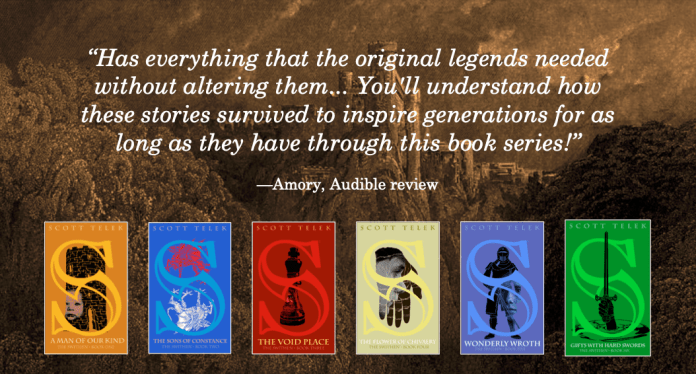
You have heard that The Swithen remains faithful to the medieval Arthurian legend as laid down between the years of 1136 and 1485. But what exactly does that mean?
The goal of The Swithen is to offer a retelling of the Arthurian legends up until 1485 AD, when Sir Thomas Malory’s Le Morte d’Arthur was published. The reason for that date is to make a distinction between the Medieval period in which the classic tales were initially put down, and some later works that change characters around play fast and loose with events.
The Swithen intends to preserve the integrity of the original tales while adding context, psychology and character motivation to make the tales understandable and compelling to modern readers.
So then, what are the rules? What can be changed? What about the old legends is set in stone, and what is fair game for revision or expansion? Find out below.
WHAT CANNOT BE CHANGED?
The structure and meaning of the legends
The point here is to illuminate and interpret what is already present in the Medieval legends, not to create something new. Therefore the structure and meaning of the tales will remain unchanged.
The stories and events as detailed in the legends
The basic structure and events of the stories must remain the same, and cannot be changed. Still, this leaves a lot of room to expand the spaces between the events, and to choose which events to include where, in order to give each novel a shape and to illuminate relationships that suit the larger scope of the series.
The outrageous claims made in the sources
I am committed to preserving even the wildest claims of the sources, for example, that Lancelot single-handedly killed sixty thousand people. Those are the stories as laid down, and the challenge of this series is to find a way to make sense of them as they are, not to change them to fit my meaning or purposes.
The characters
My intent is not to change any of the characters, but to offer an interpretation of them, and a deep delve into their psychologies and motivations, such that will illuminate and give depth to the larger themes of the existing stories.
This is not as simple as it seems, however, as many of the tales offer no characterization, or say one thing about the characters while their actions say another. For example, the sources say that Merlin and Uther Pendragon had great love for one another, but by the latter part of Uther’s life Merlin refuses to speak with Uther and repeatedly berates him. I tend to extrapolate more from a character’s actions than what the overall legend states, which tends toward portraying everyone in harmony.

.
WHAT CAN BE CHANGED?
Characters can be enhanced or expanded
The stories, as told in Middle English, are very sparse, especially concerning character psychology and motivations. I feel free to add new characters or enhance and expand existing characters in order to make greater sense of their personalities, add shape and character arcs, and help to humanize the story.
New events can be added
Actions or events that are not described in the legends, but might help further unify the story, connect events or make sense of the overall sweep, can be added, but existing events cannot be greatly changed.
Character psychology can be added
One of the most wide-open areas for shaping the stories is in the psychology of the characters, which is very sparse or nonexistent in the source legends. In the legends, there are very few basic emotions (anger, love, jealously, honor, shame), so retelling the tales with an emphasis on the thoughts and emotions of the characters offers me a lot of freedom to bend the story to my will, and bring out the most compelling themes.
Events can be emphasized or de-emphasized
While events cannot be changed, the importance of the event can be magnified in order to work better within the story or illuminate something about the overall work. Several extremely important events in the sources go by very quickly, and in numerous cases I will expand upon them in order to give them their proper prominence. Similarly, other events can be de-emphasized if they don’t contribute greatly to the overall story.
You might be surprised, as I constantly am, at the hugely important conversations and events that are there in the original works, but delivered without the weight of emphasis that would give it the proper importance within the story.
If there is more than one version of a character or event, I can choose the one I like best
Often in the various sources that make up the legend, there are multiple versions of the same event or character. In that case I can choose the one I wish to use, mostly on the basis of what will help the entire thing hang better together as a cohesive whole and one unified story, but sometimes simply on the basis of which one I like best.
I hope this helps you understand what is meant by saying that The Swithen represents the authentic Arthurian legends as laid down between the years of 1136-1485, and that by reading The Swithen series you will discover the Medieval Arthurian legend as it was originally intended, just in a version made readable and relatable for modern readers.
 The Swithen