
King Arthur: The Basics
Looking for a basic primer on King Arthur and his legend? Here you go.
Was there a real King Arthur?
There probably was, but we know very little about him. He appears in several early chronicles (whose accuracy is in no way verifiable) where he was a notable warrior living in the 500s. That is about all we know for certain. All the stories we know about King Arthur are part of the mythology that rose up around him, making this a real legend in the true sense, i.e. a real person who became the subject of a number of fantastical stories.
How did all these stories about him develop?
They grew up over the next thousand years, at different times, by different authors, with different storytelling purposes in mind. The major works were The History of the Kings of Britain by Geoffery of Monmouth in 1136, which introduced Arthur and Merlin (although they didn’t yet know each other) and described Arthur’s first early wars. Next, French writer Chretien de Troyes introduced the character of Lancelot and the concept (although not the quest for) the Holy Grail around 1215. The Vulgate Cycle and Post-Vulgate Cycle of the early 1200s attempted to bring a great deal of literature together into the longest existing unified story, including some storylines and excluding others. Then in 1485, Sir Thomas Malory edited down most of the major tellings and arranged them in his own order, resulting in Le Morte d’Arthur of 1485, the only telling of the complete tale by a single author.
Watch or read The Development of the Arthurian Legend >>>
So is there one authentic story of King Arthur, Camelot, all of it?
No, there is not. That is one of the most important things to know; there is no one, unified, definitive version of the Arthurian legend. There is a collection of different legends by different authors written at different times, and a few attempts to gather some of those tales and pound them into a unified narrative. But all of these tellings exclude some stories, stories that are equally valid.
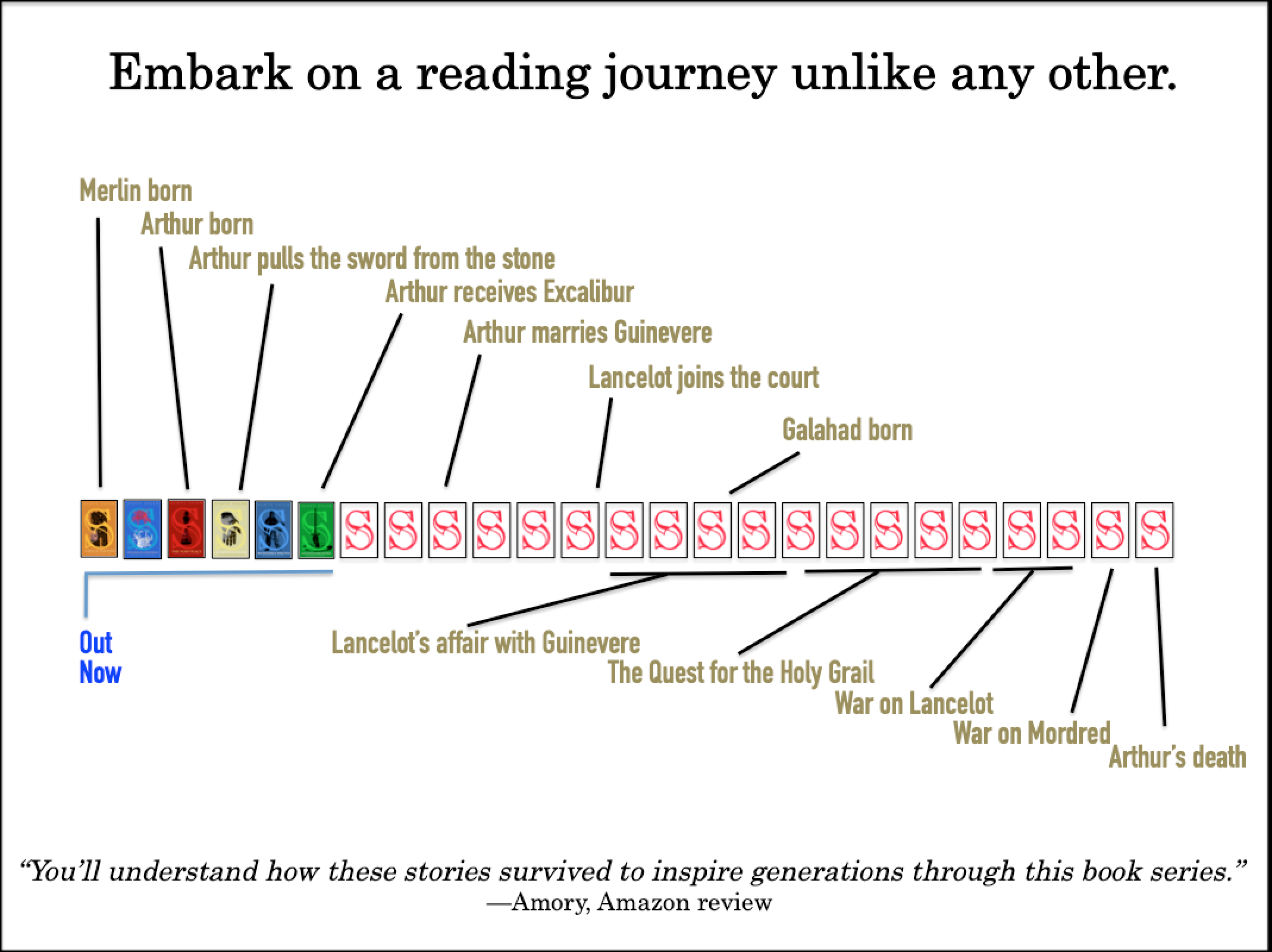
So then how can The Swithen claim to be “the real Arthurian legend?”
The words “real,” “true,” and “history” are all relative when used to refer to the Arthurian legend, which straddles a little bit of all of them. In this case, I mean the period of the flourishing of the legend, from 1136 to 1485. What I mean to express is that The Swithen remains faithful to the stories of the classic period and does not include Arthurian tales created later than 500 years ago. It expresses the medieval tales and not the more modern takes on the Arthurian mythos, and it doesn’t try to “fix” perceived shortcomings in the original material.
Why was Sir Thomas Malory’s Le Morte d’Arthur so important?
It was short, making it readable, and it was released at the introduction of the printing press, making it one of the few books available to the masses at that time. It became one of the first bestsellers, meaning numerous people read it. Also, Malory applied his poetic and literary genius to his retelling, giving it a level of artistry most agree the rest of the Arthurian material does not possess. It is also the only telling of the entire tale by a single author, from one single viewpoint. And it’s brilliant.
Watch or read How to Read Le Morte d’Arthur >>>
Is any of this historically accurate?
Short answer: No. Even the earliest “histories” that may refer to a real King Arthur are considered to be primarily fiction. The tales do refer to real events—like Rome’s occupation of Britain or the invasions of the Saxons—but the stories themselves should be considered entirely fictional. They are also riddled with anachronisms. The people of the 500s did not have stone castles or plate armor. So it’s best to read them as fictional stories taking place in “medieval land.”
Where is the story of Sir Gawain and Green Knight?
That is a separate work of literature by a different author which was never brought into the primary tellings of the legend (although I plan to weave it into The Swithen). It exists as a separate work with Arthurian characters and in the Arthurian world, but does not intersect with the primary storyline we have come to know.
So everything I “know” about King Arthur, where does that come from? Like the sword in the stone, Excalibur, Camelot?
If you have not read Le Morte d’Arthur or taken a class in Arthurian literature, what you know is probably what has filtered down to us through pop culture, movies, television, comics, video games and more. The thing is, most of what the majority of us “know” about King Arthur does not match what’s in the actual literature. The legends are a true epic, meaning they tell a massive story unfolding over almost a hundred years, which also means they don’t break down easily into neat little stories that make for good TV or movies. As a result, the actual legend remains unknown to the majority of people, and as someone who has taken a deep dive into the literature, I can assure you there is a lot to the Arthurian legend that the average person does not know.
Watch or read Why Are There No Good King Arthur Movies? >>>
What is the best King Arthur movie to watch?
Well, unfortunately there is not one all-round best King Arthur movie to watch. The best of all is Excalibur, which captures the atmosphere and visuals better than anything, but is trying to cram decades of story into two hours, unfortunately dissolving into mush… but mush that looks amazing. Most of the others take liberties with the story and characters or adapt just a part of the story, or sometimes just plain make up an entirely new story with characters who have the same names.
Watch or read Excalibur: Movie vs Legend >>>
.
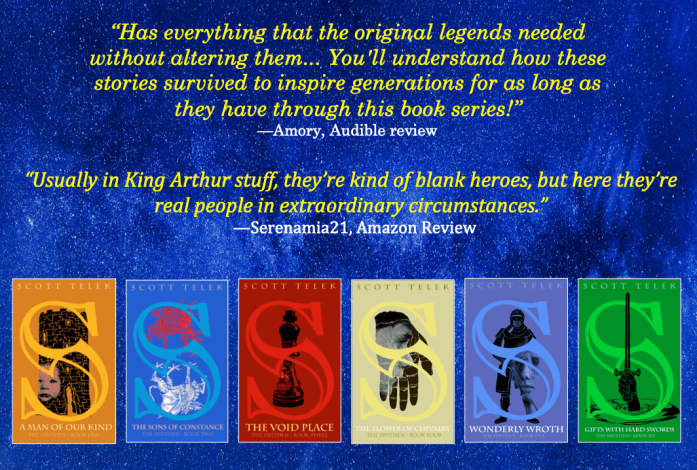
 The Swithen