
The Void Place FAQ
These questions are intended for people who have already read the book. If you have not read the book, you will encounter SPOILERS for this book, but not for any other books in the series.
It’s so dark! And Igraine is treated so poorly. Is all of this really in the legend?
I’m afraid so. One of the things you have to love about the Arthurian legend is that it’s not afraid to go there, but at the same time, no one can argue that it isn’t misogynist and that our heroes, Merlin and Uther, really do some unforgivable things. I went through a lot of anxiety about how to approach this book, because on the one hand I am committed to staying faithful to the legend, while on the other I don’t want to appear to endorse what our characters do in the story.
I basically decided to lean into how horrible it was for Igraine and not sugarcoat it in any way. In the legend, Igraine does cry a few times, but ultimately is totally fine with marrying Uther and moves on from Gorlois without much of a problem. So I did change the material to emphasize her happiness with Gorlois, how her life was ruined, how horrible the crimes against her body and autonomy were, and the lingering impact of it. I changed Uther to be in the midst of a serious psychological crisis, because otherwise he’s just a straight-up rapist, and I added Merlin’s crisis throughout and his scoldings by Blaise and his mother because Merlin is not going anywhere, and somehow we have to know what he did and yet not hate him forever. That’s a challenge to an author!
Igraine was deceived, but not violently forced into sex. Does that qualify as rape?
I am a man and have only a distant understanding of what women might actually go through. I have had women unhappy with my casting what happens in the book as rape because they say it diminishes the impact of violent rape. I am just trying to do right by women and portray this awful event in a responsible way. Igraine was deceived into having sex with someone she hates, someone she would never consent to have sex with if she were aware of what was happening. To me, that qualifies as rape, even though it is not violent, and I also thought it was important that we name what happens as rape in the book.
Does Igraine really cut herself off from humanity in the legend?
No. What happens is that her character vanishes from the story, except for one short appearance later. One of the unfortunate aspects of the legend is that the women are often portrayed as being just fine with the ways in which they were abused, and move on without a problem or any consequences. I portrayed Igraine as fearful of humanity at the end to show that what happened to her is not okay and there is nothing that can ever make it okay. There is more material with Igraine coming up in future books that will give her character more context.
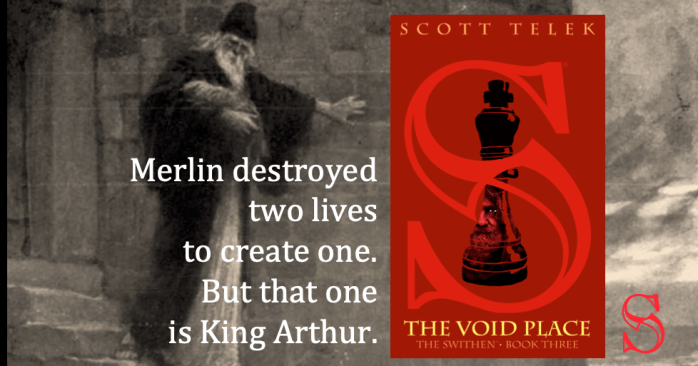
Is this really the root of Morgan le Fay’s hatred of King Arthur?
In the legendary sources, Morgan and Margause are not mentioned or present for this entire story until they get married at the time Igraine marries Uther. Logically, they would be there, and I thought it would be an important way to flesh out their characters (both daughters have very prominent roles to play going forward) to have them witness the destruction of their family as it happens. In the sources, we never know why Morgan le Fay hates Arthur so much. I thought that by having her present at this time of the story, it would greatly help flesh out her motivation for hating Arthur so much later.
Did that whole thing with Riger and the Round Table happen in the legend?
Very much! It was left out of Le Morte d’Arthur, but it is in the longer versions of the saga, and the seat, later referred to as the Perilous Seat (AKA the Seige Perilous) will play an important part later in the story. But there are other elements that I connected in order to make the entire thing flow as a connected story. For example, there are rumors that Merlin has died, but that is separate from Riger trying the Perilous Seat. Also, in the legend, Riger trying the seat is not connected to Uther’s sudden obsession over Igraine—which is completely unmotivated in the legend. So in order to flesh out Uther’s psychology and make the entire story flow as a cohesive whole, I have made all of these separate events interconnected.
Did Uther and Merlin have such a poor relationship in the sources?
The sources try to have it both ways. We have to remember we are talking about something written in the 1200s, with a very different understanding of what we would call “fiction” now. The sources will say that Uther and Merlin had great love for each other, but at the same time Merlin has been absent from Uther’s life except to chastise him for letting Riger try the seat, and will not speak to Uther toward the end of the story. Merlin does tell Uther that if he gets what he wants—which Merlin himself is delivering to him—he will ruin his life. So there are several elements in the legend that allude to them having a poor relationship. Again, I am trying to make the entire thing into one cohesive story with a plausible psychology for these characters, and for that reason I close to build on the hints of their poor relationship because that worked better for the overall flow of the narrative.
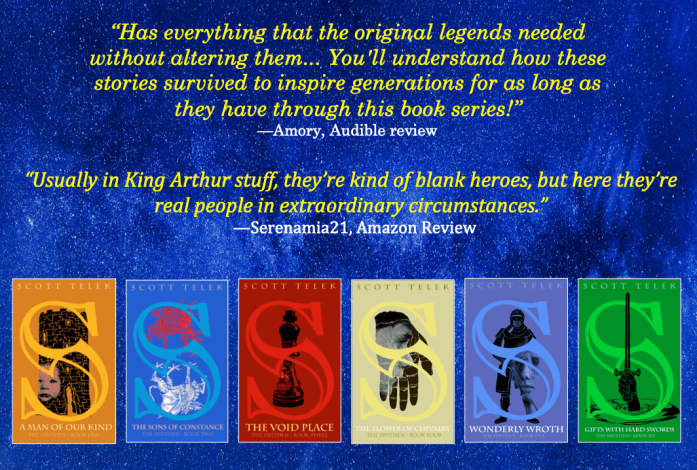
 The Swithen