Book Excerpt: Arthur and the Little People

Hi everyone, I hope you are holding up well during this long, unprecedented pandemic. By now there have been so many different phases to it that… well, I don’t know what to say. I feel like we were in panic mode, then it went on long enough that we all kind of decided it was over (although it wasn’t), and now I feel like a new kind of normality has set in, and one feels like one should be getting back to normal… only you can’t. And that brings us to today.
Anyway, I have a new excerpt from the most recent book I’d like to share, and it comes with a bit of a story. A friend of mine lent me this book The Journey Through Wales by Geoffery of Monmouth, from 1191. It was said to be a description of his trip through Wales, but it turned out to be much more interesting as a repository of folklore. Geoffery is a clergyman who traveled around to all the different churches in his association, and in doing so he collects all the different interesting stories from each town that he visits, and writes them all down. So while 70% of the book is actually filled with descriptions of the towns and churches that he visits, the rest is jam-packed with all sorts of interesting little folk stories.
Now Book 4 of my The Swithen series, The Flower of Chivalry, depicts King Arthur’s childhood, and in the book he develops a sort of “boy and his dog” relationship with a strange amphibian creature. His parents don’t really like it, and think that he should play with normal boys. Now, in The Journey Through Wales, one of the stories Geoffery comes across is about a boy who became friends with a group of little people, and how he eventually lost their trust because he became lonely for his mother. That said, there was also a footnote in the book saying that one of the editor’s students was a Welsh woman, and remembered hearing the story told when she was growing up.
Since I love to expand on the folklore of my novels with… well, more folklore, it occurred to me that this little tale could be woven into the actual novel in quite an organic way, as Arthur’s parents telling him a cautionary tale about why it’s better to have human friends. P.S., it wasn’t the only bit of folklore from Geoffery’s book that made it into the novel.
Discover the story in this excerpt from The Swithen Book 4: The Flower of Chivalry. If you like it, please share it, leave a comment, you know, whatever it is you do. If you like it, you might like to check out the entire book. In any case, I always love to hear from you. Be well, stay safe and wear your mask.

New book free on NetGalley

Greetings, everyone, I hope you’re well.
Right to the point: the new Swithen novel, The Flower of Chivalry, is available free on NetGalley. That’s a site that gives you free, usually pre-publication books for perusal in exchange for an honest review wherever you review books. You can get it for free on NetGalley right here.
If you don’t know, The Flower of Chivalry is a vision of King Arthur’s childhood until he pulls the sword from the stone. But even if you “know the ending,” you don’t know how it happens or all that happens to Arthur to bring him there.
The book explores his relationships with his loving foster mother and gruff foster father–but of course, Arthur has no idea that he’s adopted, and they are forbidden to tell him. He spends his days exploring the forest and comes to help a new friend that is shunned by all others. When one of his adventures is an unexpected success, he drifts into overconfidence and makes a disastrous mistake that nearly ends his life before its begun.
The novel is light, fun and lyrical (until it turns dark and terrifying) and is filled with family comedy and drama, fun boyhood adventures, lots of adolescent confusion and an abundance of magic. I’m thrilled that it has been getting universally great reviews so far, and I’m happy that most people are finding its light, fun vibe an antidote for these grim times. If you’re on NetGalley, give it a shot!
Find The Flower of Chivalry at NetGalley
Book 4 free 5/28-6/1

Greetings folks, I hope you’re all holding up well. Whether you’re still sheltering at home or venturing out cautiously, I hope you’re doing it safely and finding some way to enjoy yourselves. I am working (for which I am so thankful), safe (also thankful) and working on Book 5 while finding it possible to get out and enjoy some nature while keeping away from all other humans (kind of my goal anytime) so I feel fortunate and am trying to stay focused on feelings of gratitude.
The news as of this post is that The Swithen Book 4: The Flower of Chivalry is FREE on Amazon today and the next four days, from 5/28 through 6/1. If you don’t have it yet, go get it! It’s FREE! If you do have it, tell someone else to get it! And if you do both: THANK YOU!
Go get Book 4: The Flower of Chivalry for FREE!
Seriously, I would very much appreciate it if you would tell your friends or family to check it out by downloading it free for the next few days. I’m not sure I have emphasized that IT IS FREE. If you’re not sure what to say to others about it, here’s a helpful conversation guide:
If they say “But I don’t have a Kindle,” you say: “There’s a FREE Kindle app that makes it so you can read it on any phone or tablet–even other e-readers!”
If they say: “I don’t like ebooks,” you say: “Yeah, but you can get a taste of it for free and then decide if you want to order it in paperback.” (Only there is no paperback yet but, you know, there will be.)
If they say “I don’t read fantasy books,” you say: “Actually, this series is very different, it’s really about character and psychology more than anything. This book is modeled more on Huck Finn than like, The Hobbit or whatever. It’s free, why don’t you just give it a shot?”
If they say “It’s Book 4 of a series, right? I don’t want to come into the middle,” you say: “Yes, but it begins a whole new storyline, and you don’t have to know everything that happened before to get into it.”
If they say “Ugh, King Arthur. Isn’t that all so played out? And it’s not like we don’t know the story,” you say: “Actually, this series is based on the actual legend, which is a lot more full of surprises than you think. You can even learn the actual legend from this series.” (we won’t overburden them by saying that this particular book is 95% original).
If they say “Reading? Like–a book? Like, the printed word? Isn’t that like–OMG, a text!” then you say “It’s about to be optioned by HBO and Michael Fassbender and Christian Bale are in talks.” And this isn’t entirely untrue. It could be optioned by HBO. And surely Michael Fassbender and Christian Bale are in talks. About something. We didn’t say they were in talks about this book, did we?
That’s it for now! Go to Amazon and get a free book, or tell someone else to. Thanks and stay well!

Who was Nimue, the Lady of the Lake?

Netflix’s series Cursed is centered around Nimue, the Lady of the Lake from the King Arthur legend. But who was Nimue in the real legend, and what role did she play in the stories of over 800 years ago? Read on and find out.
The Nimue of Netflix’s Cursed
If you’ve been on this site at all, you know that The Swithen book series is faithful to the real Arthurian legend, and that most of the King Arthur stuff we see in books, movies and TV are remixes of the legend in order to make it fit more conventional narratives. The Middle Ages had a whole different manner of storytelling that doesn’t have the kind of character beats, action setpieces and climaxes that we expect from “peak TV” entertainment today. From the description of the show and the novel by Thomas Wheeler with illustrations by Frank Miller that it’s based on, Netflix’s Cursed is one of these remixes. The characters may have the same names as those in the Arthurian legend, but that’s where the similarity ends.
So although Netflix’s Cursed has about as much in common with the actual Arthurian legend as a rusty tin can does to a hoot owl, it makes us ask; what isin the actual legend? Let’s dive into it.
The Ladies of the Lake
In the actual legend, there are two major ladies of the lake. The first is Viviane (pronounced Viv-e-ah-nay) and the second is Nimue (pronounced Nim-e-you-e, although odds are they won’t pronounce it that way on Netflix’s Cursed). One isn’t really the successor of the other, it’s really a matter of different versions of the King Arthur legend being folded into one. What we do know is that they live in a valley where they project the illusion of a lake in order to keep mankind out. We also know that they give King Arthur the sword Excalibur, but… well, let’s get into that.

Viviane, Nimue and Excalibur
In the legend, it is actually Viviane who gives Excalibur to King Arthur. Or at least, she is there on shore, and when he goes out into the lake, a hand holds the sword above the water—so we don’t actually know who literally handed it to him. Could be some sort of lake-based assistant. Maybe even an intern. In the next chapter of Le Morte D’Arthur by Thomas Malory—the most popular telling of the legend—Viviane comes to Arthur’s court and demands the head of Balin, who has just pulled a sword that only the most worthy knight can pull. He chops off her head with it and, well, no more Viviane. PS: That sword later becomes the one Galahad will carry on his quest for the Holy Grail.
Nimue and Merlin
One of the most well-known things about Nimue is that she is the one who enchants and entraps Merlin. The famed wizard falls head over heels in love with her, and agrees to teach her all of his magic, while she can’t stand him and thinks he smells. In the Vulgate Cycle,which tells the longest and most detailed version of the legend, she even casts a spell that makes him think that he is having sex with her, while he’s not with her at all. Then eventually he teaches her how to trap someone eternally, and next thing you know—no more Merlin. This happens only a third of the way through the story, too, like not long after Arthur marries Guinevere.
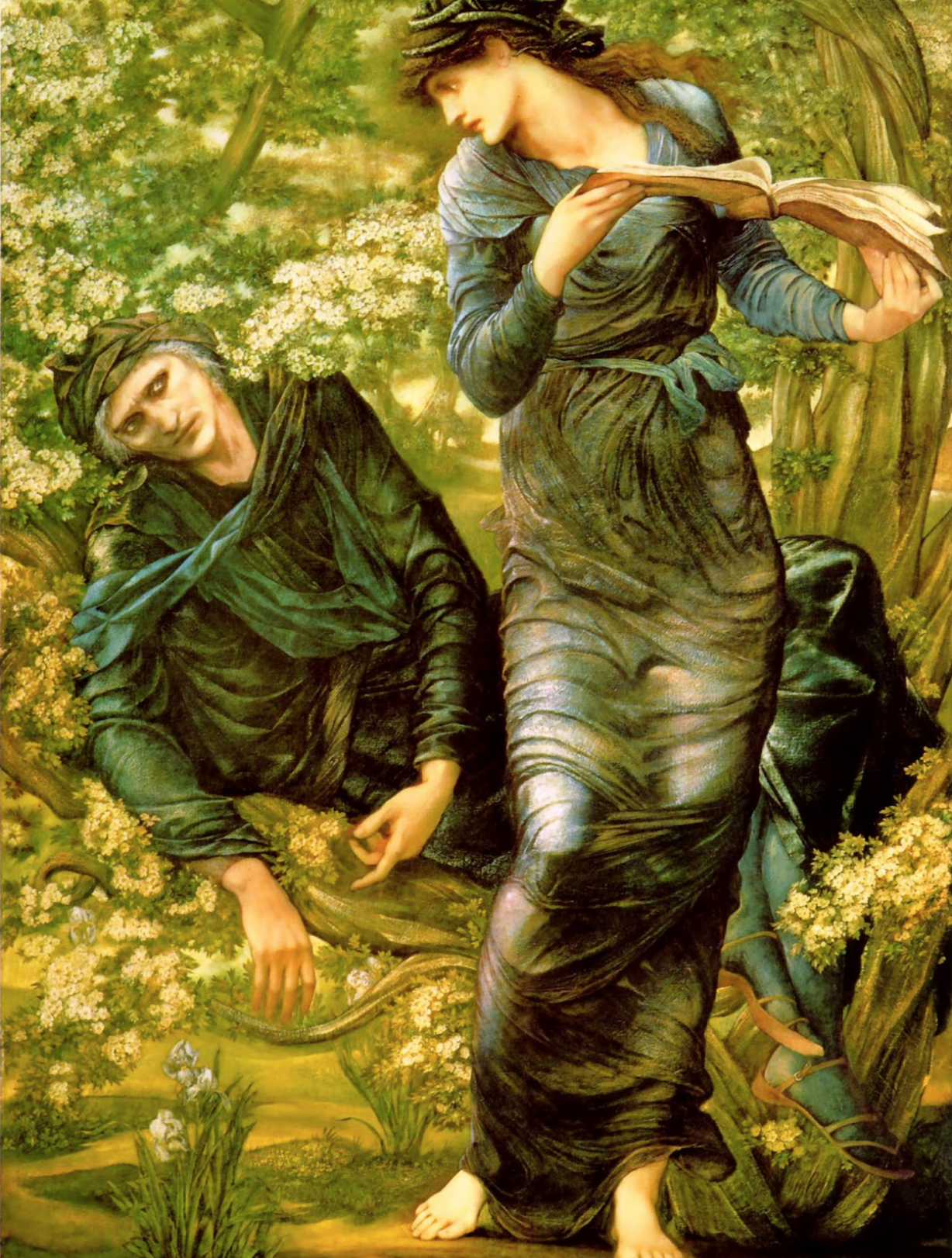
If you’re reading Le Morte D’Arthur or one of the other versions of the real legend for the first time, you might find yourself, like me, saying “Okay, so he’ll come back sometime.” And then later, “All right, Merlin is going to come back any time now, because I know he’s by Arthur’s side and helps him out, right? Right?” Well, no. That is one of the main things from the real legend that has been changed in almost every popular version of the story—Merlin actually vanishes a third of the way through, and never comes back. Doesn’t make for very good television, however.
This is one of the most fascinating aspects of the real legend, however, because it leaves that unanswered question: if Merlin is all knowing, how could he not have known what was in store? There’s no answer, but the question is one of the most intriguing mysteries the legend leaves for us to contemplate.
Nimue and Lancelot
Another thing about Nimue that is not widely known outside of Arthurian circles is that she (or Viviane, hard to tell sometimes) is the woman who raises Lancelot as her son (and also his fellow knights Lionel and Bors). Another thing not widely known is that she raises Lancelot… after kidnapping him from his real mother. Here’s the deal.
Lancelot’s father was King Ban, who came to help Arthur during the first part of his reign, when the other kings of the land were mad they had to hand the country over to a teenage king. He went back to Benwick afterward, but when he needed help because King Claudas was besieging his city, Arthur was nowhere to be found. King Ban fled and when he went to the top of a hill and looked back, he saw his city in flames and died on the spot. His wife put the newborn Lancelot down and ran to him at the top of the hill. When she remembered the baby and ran back, she found him being carried away by a mysterious young woman—our Nimue. She took Lancelot into the lake, and he didn’t emerge until he was eighteen. This leaves another intriguing mystery in the heart of the Arthurian legend… is Lancelot’s affair with Guinevere and eventual war on Arthur the result of Arthur’s failing to help his father?
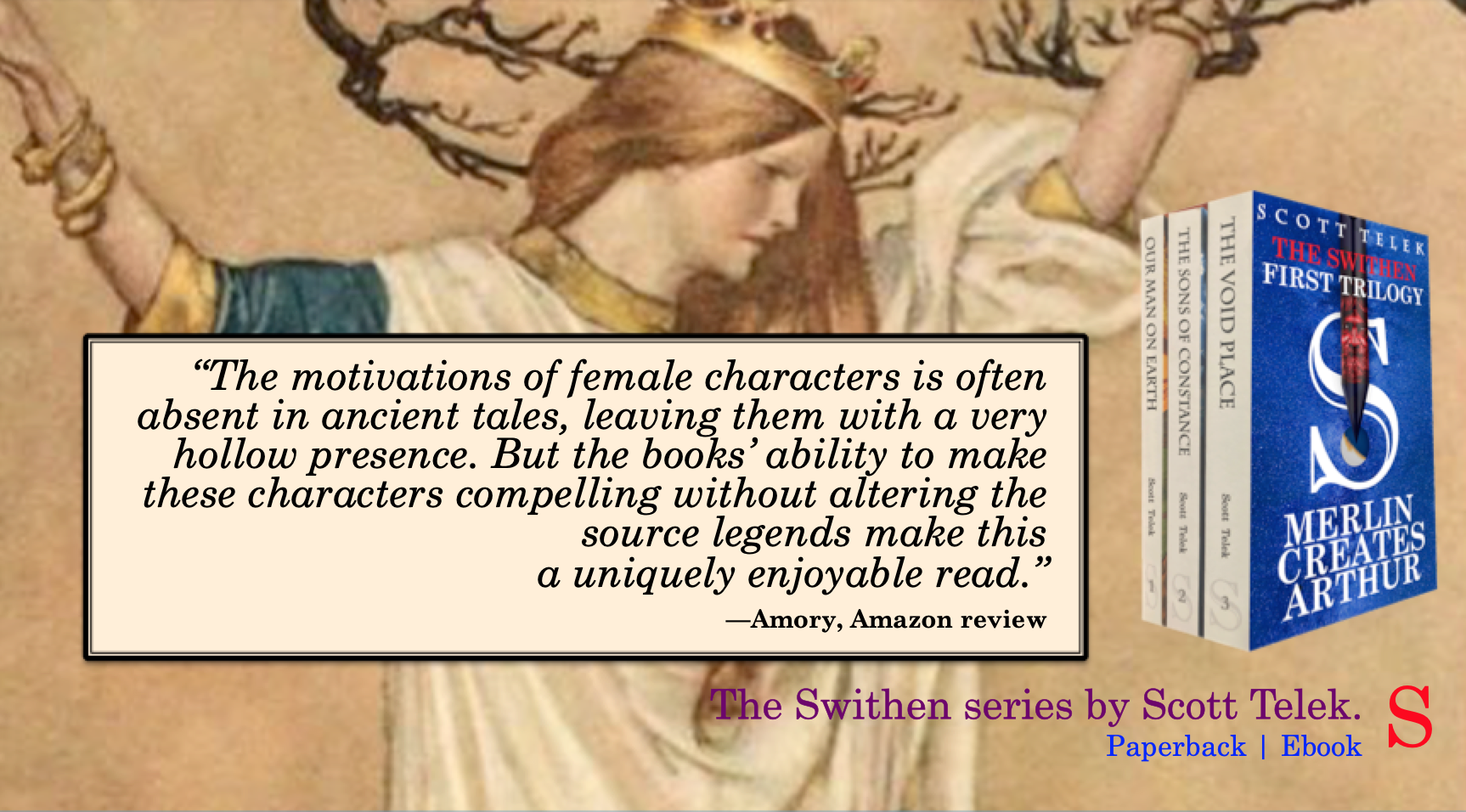
The legend gives almost no information about Lancelot’s childhood and how he came to his incredible prowess, but one of the interesting underplayed aspects of the story is… if Nimue is in charge and men are her servants, then she presides over a matriarchal society—and this is where Lancelot was raised. When Lancelot turns eighteen, Nimue tells him that King Arthur has a stable of the most noble knights in all the land, and he should go to join them. She then leads him there in a huge procession and requests that Arthur take him in. And the rest—is legend.
Nimue and Morgan Le Fay
After Nimue entraps Merlin, she then takes on the role of primary supernatural figure in the legend. Still, she remains mostly on the sidelines, dropping in here and there. She first appears in King Arthur’s court just after his marriage to Guinevere. After that is when Merlin falls in love with her, and one of her most prominent appearances comes after Morgan Le Fay’s big moment in the legend; her attempt to kill Arthur and claim the throne for her lover.
Arthur entrusted Morgan with Excalibur for safekeeping and—maybe not so smart on his part. But he’s a trusting soul, and she ishis half-sister, after all. She makes a copy of it and gives the real one to her lover, Accolon, then arranges for Accolon to kill Arthur with it. Those familiar with the legend know that Excalibur is good, but the sword’s scabbard is actually better, because anyone who wears it will not bleed from any wound—which is a big help in a battle! When things are going poorly for Arthur, Nimue shows up and makes Accolon drop the sword and scabbard—at which point he starts bleeding profusely—and Arthur picks them up and wins the battle. Accolon soon dies, and Arthur sends his body to Morgan with the message that he’ll be coming after her next. So you see, the real legend is so boring, we all but have to change it!

Nimue makes only a few cameo appearances in the legend after this, and apparently has made up with Morgan by the end, because the two of them are on the boat that takes the dying Arthur to Avalon at the very end of the whole thing.
Nimue in The Swithen
Since The Swithen series is committed to remaining faithful to the actual Arthurian legend as laid down between 1136 and 1485, Nimue will not appear until much later in the series. We’re up to Book 4, Arthur’s childhood, but Nimue will not appear until Book 10 or so. We have seen Viviane, however, who makes cameo appearances in Books 1 and 3, and who has a nice scene with Arthur in Book 4.
When Nimue does arrive, her story will follow the actual legend, including all of the episodes that you’ve read about above. We may lose something in TV-ready moments, Girl Power battles and camera-ready reveals, but we will gain the eerie, uncanny and lasting resonance that only real legend can provide.

New comparison of legend to novel for The Flower of Chivalry
Greetings readers and exceedingly fine people!
I hope you are doing well and surviving okay. I am fascinated by all the different phases of this pandemic, and it seems right now we’ve moved into “I’m ready for the crisis to be over–so it IS over! (even though it’s still going strong).” Quite a strange time. But I hope that you are well and taking care of yourself and the ones you love–and also the ones you don’t love, and strangers, too.
I am very happy that the reviews coming in for Book 4: The Flower of Chivalry are so overwhelmingly positive. I was hoping they would be, since the tone is so light and happy (until it turns dark and terrifying) and there are some good surprises, so I’m really thrilled that it is being well-received so far.
For each book this far I have written a “Legend to Novel” piece that compares what’s in the actual Arthurian legend to what’s in the novel, calling out what is new or enhanced, but I didn’t think I would do that for this one, since this book is 95% original. The only thing that is in the legend is that Arthur pulls the sword at the end, and the way in which he does it. But then it occurred that even so, there are characters from the original legend that appear, and also themes that will blossom in future novels that are being set up here, so I have written Legend to Novel: The Flower of Chivalry.
This novel also has another female character (after Merlin’s mother) who doesn’t receive so much as a name in the original that has been fleshed out into a maor character here, and that is Arthur’s adoptive mother. I call her Nerida.
Can you believe that a character who raises Arthur as her own child is barely even mentioned in the story of his life? Of course the foster father, Sir Ector, is a major character and receives much coverage in the legend, but his mother is a giant void.
It goes to show how women in the legend are treated as just largely irrelevant. I am not making a giant feminist statement by giving the women of the story equal weight and complexity to the men, I am just evening out the telling and trying to be realistic. Nevertheless, it’s great that readers are responding and I am proud when people say that this filling out of the female characters is one of the distinctive features of the series. People look at me funny when I say that the real Medieval Arthurian legend is largely about gender relations, but when you fill out the women’s side of the story it becomes more prominent.
All right–time to me to sign in to my real job–the one that pays the bills! Again, I wish you peace and patience through this crisis, and if you’re up for a rollicking good time, go read Legend to Novel: The Flower of Chivalry.
 The Swithen