Lose yourself in the Arthurian Legend
Discover a story so powerful it has endured for a thousand years.
Book 6 out now in ebook and paperback >>>
The Swithen is a series of novels that interpret the medieval Arthurian legend for readers of today.
The challenge author Scott Telek has set for himself is to remain absolutely faithful to the legend of King Arthur as laid down between the ages of 1136 and 1485. He can add or enhance scenes and characters, but anything he adds must slot into the existing Arthurian legend without changing it. In this way you will know that as you read, you are discovering the real, Medieval legend of King Arthur.
“Brings me into the medieval world as other versions of the Arthurian legend haven’t.”
—Starborne, Amazon review
Twenty-five novels are planned to tell the Arthurian legend in the full scope and majesty it deserves. Five of those are completed and available now.
Each novel is not a sequel, but the next installment of one continuous saga. The entire series is planned to the end right now. That means there will be no making it up as we go along.
Too many Arthurian books and movies focus only on the valiant knights, romance, epic battles and stunning sorcery, losing the weirdness, poetic mysticism and spiritual drama that makes the Arthurian legend so overwhelmingly powerful. The Swithen novels are character-focused, bringing to life the human drama that makes these characters so resonant and enduring.
“Too often, Arthurian characters become stick figures in modern retellings, but that is far from the case here… I only wished it was longer.”
—Tyler Tichelaar, Author of the “Children of Arthur” series
Arthur. Guinevere. Lancelot. Excalibur. Merlin. Camelot. Sir Gawain. The Lady of the Lake. Telek makes the Medieval story accessible and engaging for casual readers, making family relationships clear and expressing the importance of key figures and events. Discover how they all play into the decades-spanning, densely interwoven tapestry of a saga we only think we know.
“Makes the Arthurian legend readable and relatable for us.”
—Alex S., Amazon review
“Really enjoyed books 1, 2 and 3. Couldn’t put it down. It is written so well you become part of the story. Loved it. Bring on the next 20 odd books. Can’t wait!”
—Amazon review
“My favorite Arthurian series”
—Leverett Butts, Author, “Guns of the Waste Land”
Book 1: A Man of Our Kind
The birth of Merlin.
The betrayal of Britain.
Two threads intertwine. The Swithen begins.

The devil wants a man on Earth to lead people into temptation. He chooses a human woman to bear his child, killing her family one by one until he gets to her. But he didn’t count on her ingenuity to turn the child to good while allowing him to keep his powers, allowing him to become Merlin, King Arthur’s legendary wizard. Meanwhile, tyrant Vortigern climbs to power by inviting the Saxons into the country, turning a blind eye to their designs to make Britain their own. As the country turns against him, so does his own son, exacting a painfully personal price for his quest for domination.
This new novel is a completely rewritten version of “Our Man on Earth,” the former Swithen Book One, and includes the Vortigern story for the first time while completely transforming the previous book’s contents, including changing Merlin’s mother’s name from Meylinde to Adhan, a name located in an obscure Arthurian source.
“I want to say is how very powerful the end of the novel is. The conversations between [Merlin] and his mother on [his moral character] are the culmination of the book and bring the story to a powerful close.”
—Tyler Tichelaar, Author, “Children of Arthur”
Learn more about Book 1: A Man of Our Kind
Book 2: The Sons of Constance
The first king is a tyrant.
The second king hasn’t long to live.
The third king is way out of his depth.
And Merlin rules them all.

Seven-year-old Merlin is called to Vortigern’s side to help him wrest control back from the Saxons, and defend against Pendragon and Uther, the sons of the former king who have come back to reclaim their birthright. When they return, Merlin sides with first one, then the other as he leads them to victories in battle, witnesses an epic fight between two dragons, deals harsh justice to one who doubts his abilities and creates both Stonehenge and the Round Table. Meanwhile, he is sets the elements in place that will result in the birth of Arthur.
“If you weren’t fascinated by how Telek depicted Merlin in the first novel, I guarantee you will be here… although the depiction of the three kings who precede Arthur are, in my opinion, Telek’s triumph… Telek has created the most real and sympathetic version of Vortigern to date.”
—Tyler Tichelaar, Author of the “Children of Arthur” series
Learn more about Book 2: The Sons of Constance
Book 3: The Void Place
The destruction of a man.
The devastation of a woman.
The birth of King Arthur.

Uther is king, but is is chafing under Merlin’s control. When an attempt to make his own decision fails disastrously, he falls into obsession over the lovely—and married—Igraine, believing that only her love can cure him and help him regain control. What none of them realize is that they are unknowingly acting out Merlin’s plan, a plan that will give Merlin what he wants—a child of royal blood he can mold into the future King Arthur.
“With the number of well-drawn women throughout, The Void Place gains an almost feminist feeling.”
—H. Williams, Amazon review
Learn more about Book 3: The Void Place
.
Book 4: The Flower of Chivalry
A land without a king.
A sword within a stone.
A boy named Arthur.
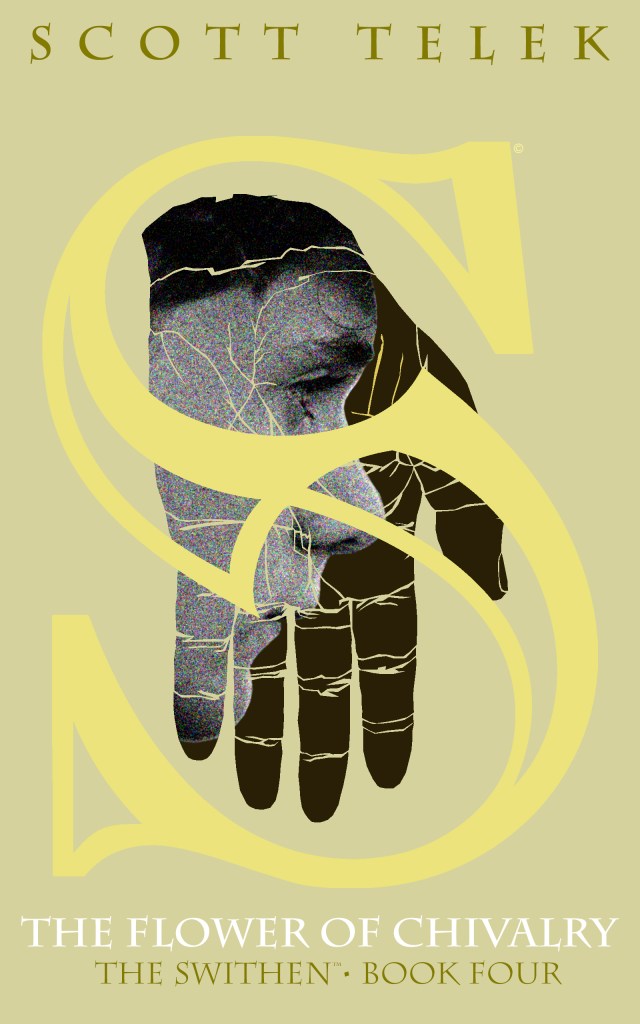
No one knows who Arthur is—least of all himself. All his foster parents know is that they are to never let him know that he is not their child. Yet there’s something in Arthur that can’t be repressed. A will to do right, to defend those who cannot defend themselves. Through his idyllic childhood in the forests that surround his home, he learns to protect and care for a friend shunned by all others, finally leading him on a dangerous journey that he handles with ease. Drifting into overconfidence, Arthur makes a disastrous mistake that threatens to end his adventures—and his life—before they’ve begun.
“I don’t think anyone has as thoroughly and convincingly imagined Arthur’s childhood as Scott Telek has done. This book far surpasses T. H. White’s The Sword in the Stone for being far more serious and far better thought out.”
—Tyler Tichelaar, author of the “Children of Arthur” series
Learn more about Book 4: The Flower of Chivalry
Book 5: Wonderly Wroth
Arthur has pulled the sword from the stone…
But he’s not king yet.
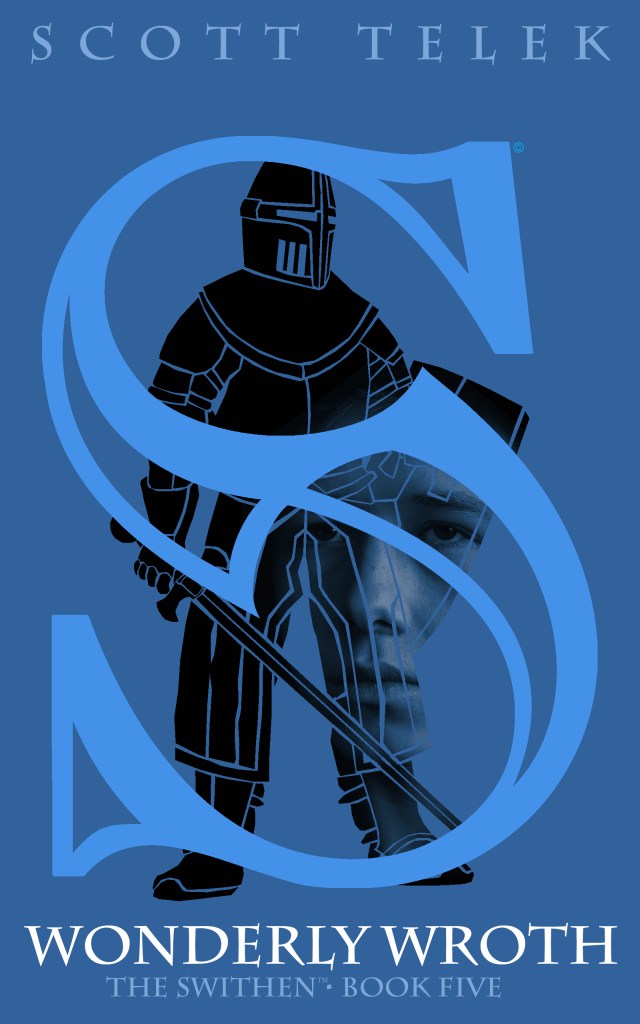
No one knows who Arthur is—least of all himself. All his foster parents know is that they are to never let him know that he is not their child. Yet there’s something in Arthur that can’t be repressed. A will to do right, to defend those who cannot defend themselves. Through his idyllic childhood in the forests that surround his home, he learns to protect and care for a friend shunned by all others, finally leading him on a dangerous journey that he handles with ease. Drifting into overconfidence, Arthur makes a disastrous mistake that threatens to end his adventures—and his life—before they’ve begun.
.
Learn more about Book 5: Wonderly Wroth
.
Book 6: Gifts With Hard Swords
A boy king.
An all-powerful wizard.
The wars without, and the wars within.
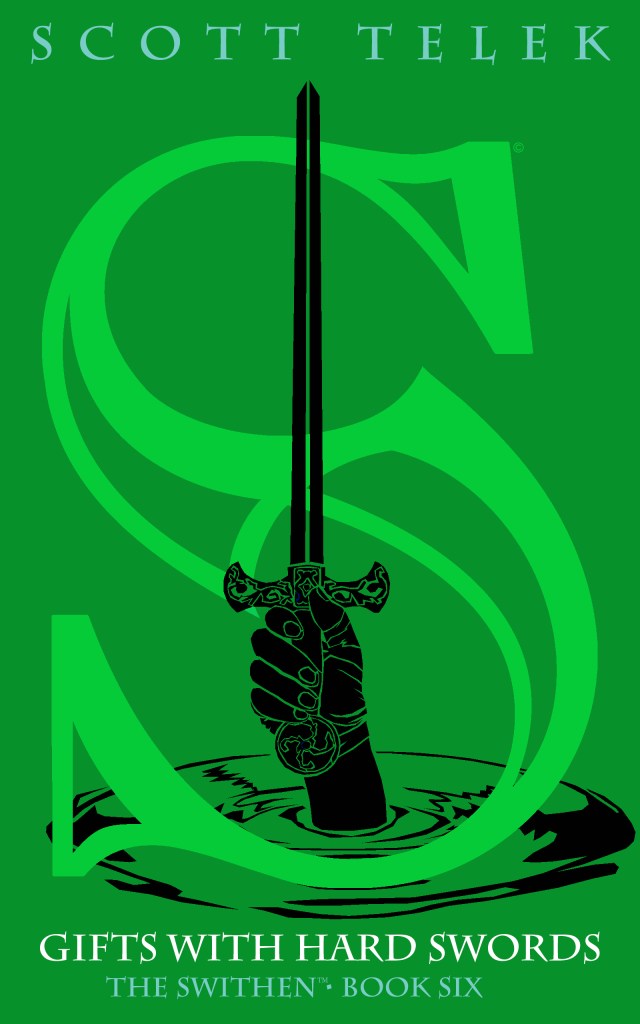
Arthur has won the crown, but not the country. Now fifteen, his first task is to defeat the armies of the fearsome kings rising against him, who refuse to hand rule of the country over to a teenage boy. He has an ever-growing stable of loyal knights on his side, as well as the magic of the powerful wizard Merlin, but will it be enough to defeat armies twenty times the size of his own? Covering the period depicted in chapter one of Malory’s Le Morte D’Arthur, this novel also weaves back storylines of the larger Arthurian sources that Malory left out. It combines into a surprisingly moving tale that shows how a young boy from the country becomes the legendary king we thought we knew.
“You really feel like you know Arthur as a person—and you really like him too.”
—Serenamia21, Amazon Review
“I have never related so much with Arthur’s character until now…. This Arthur is much more relatable than other versions, because in this one he is a human person, who was his own flaws.”
—Mariana, Amazon Review
Learn more about Book 6: Gifts With Hard Swords
The Future of The Swithen
The entire story of The Swithen is planned out now. There will be no making it up as we go along.
Book 7:
Arthur forms the Knights of the Round Table, romances Guinevere, and begins constructing Camelot.
Book 8:
Balin le Savage’s unlucky adventures leave the country under a curse that can only be repaired by achieving unity with the Holy Grail.
Book 9:
Arthur marries Guinevere, and his knights depart on three mystic adventures.
Book 10:
Morgan Le Fay makes a daring attempt to destroy Arthur and claim his throne.
Book 11:
The childhood of Lancelot in the Lady of the Lake’s hidden matriarchal society.
Book 12:
Lancelot joins King Arthur’s court and embarks on the adventure of the Dolorous Guard.
Book 13:
A mysterious new knight, Beaumains, is entrusted with a crucial adventure, while Sir Gawain fulfills his promise to the Green Knight.
Book 14:
Lancelot is torn between love for Guinevere, King Arthur’s wife, and fellow warrior Galehaut, the Lord of the Distant Isles.
Book 15:
Lancelot becomes ensnared in an affair that results in the birth of Galahad.
Book 16:
Lancelot wanders insane as Percival searches to bring him back and heal the court.
Book 17:
Over the course of one day, mysterious adventures unfold and the quest for the Holy Grail is enjoined.
Book 18:
The knights depart to seek the Holy Grail while Arthur and Guinevere’s marriage is in ruins.
Book 19:
The knights encounter death, destruction and despair as they seek the Holy Grail.
Book 20:
The few remaining knights stumble back to Camelot as three knights encounter the Grail.
Book 21:
Lancelot is drawn into a relationship that leaves Guinevere furious and another woman dead.
Book 22:
When Guinevere is kidnapped, Lancelot departs to save her while Arthur’s jealous rage grows.
Book 23:
When Guinevere’s affair is finally exposed, the kingdom collapses and the aged Arthur goes to war.
Book 24:
The distraction of the war allows Arthur’s bastard son, Mordred, to seize the throne—and Guinevere.
Book 25:
The death of Arthur.
 The Swithen
I’m impressed and amazed by the ambition of your Arthurian project, I wish you the best of luck and hope the writing experience is a satisfying one. Taking a cursory look at the cover-synopsis’s, this looks like you’re anchoring yourself with Malory and the Vulgate/post-Vulgate…and possibly some of the other sources around that time as well…(Chretien de Troyes? Robert de Boron? The Alliterative Mort Arture?) It looks like your amalgamating material, like Malory, but expanding rather than condensing. Anyway, all the best to you and your series. –Kris
LikeLike
Thanks so much, Kristan. Yes, I am amalgamating material (like Malory–I hope!) and am mostly focused in the Vulgate/Post-Vulgate but definitely bringing in the best of other sources like Chretien, Wace, etc.) And yes, I am expanding, because even the Vulgate moves quickly without much psychology or real sense of what the events mean to the characters. I also hope to bring more cohesion to the story and make the relationships more clear so we can understand their implications. It is a very satisfying writing experience, because I find the tales full of existential questions that dovetail well with my own interests. Thanks so much for your interest and comment.
LikeLike